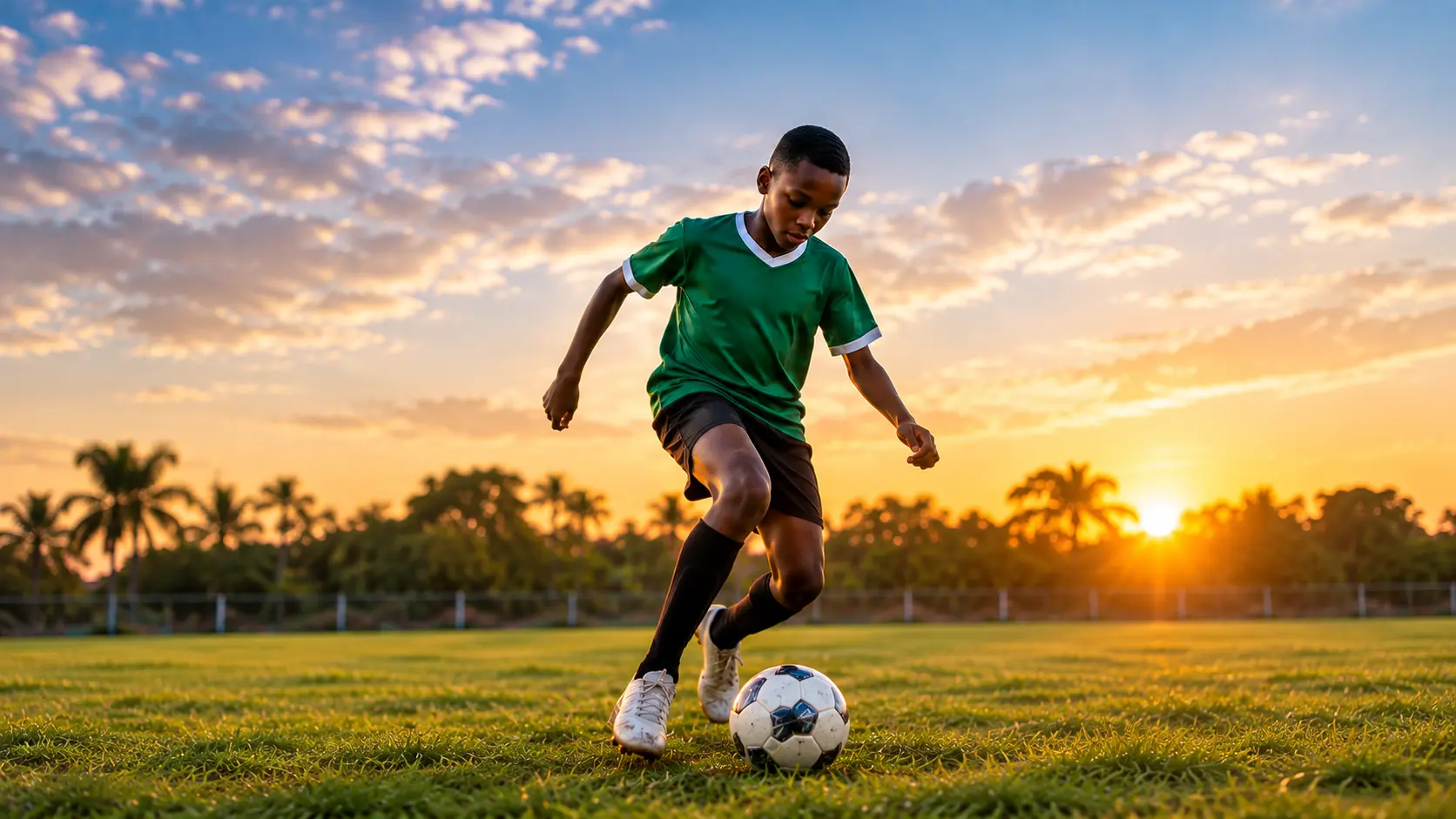
The Game Is Bigger Than the Score: Why Talanta Bora Uses Sport for More Than Competition
By Talanta Bora Academy | 16th July, 2025

The Game Is Bigger Than the Score: Why Talanta Bora Uses Sport for More Than Competition
A football match has a score.
Someone wins. Someone loses. There are goals, saves, tackles, celebrations and moments that stay in your memory long after the final whistle.
But what if the most important part of sport is not what appears on the scoreboard?
At Talanta Bora Academy, we believe the game is bigger than the score.
Sport can develop far more than physical ability. It can create spaces where young people learn to communicate, build friendships, develop confidence, manage challenges, take responsibility and discover what they are capable of.
A training session can teach discipline.
A difficult match can teach resilience.
A teammate can become a source of belonging.
A coach can become a trusted adult.
A conversation on the sidelines can open the door to something a young person has been struggling to talk about.
That is why our work has grown beyond the traditional idea of a sports academy. We use sport as a practical pathway towards personal development, mental wellbeing, psychosocial wellbeing, life skills, inclusion and stronger communities.
It started with football
Talanta Bora's journey began with a football.
In 2019, Talanta Bora Ltd gave birth to Emerging Stars Football Academy. The starting point was simple: create opportunities for young people to participate in football, develop their abilities and pursue their sporting potential.
But as the work continued, something became increasingly clear.
Young people were not arriving at training as athletes alone.
They arrived as individuals with different experiences, personalities, challenges, ambitions, families, friendships and hopes for the future.
Football was bringing them together, but the value of that experience extended far beyond the pitch.
In 2023, the organisation expanded its work into Sports for Development, recognising the wider role that sport can play in the lives of children, young people and communities.
Today, Talanta Bora is continuing that journey with a stronger focus on Sport for Mental Health & Psychosocial Wellbeing.
The football is still there.
The training is still there.
The competition is still there.
But the purpose is bigger.
What happens beyond the scoreboard?
When people think about sports development, they often think about performance.
How fast can an athlete run?
How many goals can a player score?
How strong is their technique?
Can they win the next competition?
These things matter. Sporting development requires commitment, practice and a desire to improve.
But young people also need opportunities to develop the person behind the athlete.
Sport can provide those opportunities.
A player who learns to communicate with teammates is developing a skill that matters beyond football.
A young person who learns to remain disciplined during difficult training is developing habits that can influence other areas of life.
An athlete who learns to recover after losing a match is learning that setbacks do not have to define them.
A team that learns to respect different personalities and abilities is learning about inclusion and belonging.
These lessons do not disappear when the final whistle blows.
They travel with the young person into school, relationships, family life, work and the wider community.
Sport can create a sense of belonging
Growing up can be difficult.
Young people can experience pressure, uncertainty, isolation and challenges that they may not always have the words or confidence to express.
Sometimes, the first step towards addressing those challenges is simply having somewhere to belong.
A sports environment can create that space.
There is a team to join.
There are people to meet.
There is a coach who knows your name.
There are teammates who notice when you are absent.
There is a shared objective.
There is a place where you can participate, contribute and feel part of something.
Belonging matters.
When young people feel that they are seen, valued and included, sport can become more than an activity. It can become part of a support system.
At Talanta Bora, we want our sporting spaces to encourage exactly that.
We want young people to feel that they can arrive as themselves, participate without fear of unnecessary judgement and develop through positive relationships.
A coach can influence more than performance
A coach has an important responsibility.
They teach technique.
They organise training.
They prepare athletes for competition.
But coaching can also influence how a young person understands discipline, responsibility, teamwork and confidence.
That influence should be handled carefully.
We believe good coaching is not simply about getting more out of an athlete. It is also about understanding the person.
A coach should be able to encourage a young person when they are struggling, recognise when something may be wrong and create an environment where asking for help is not treated as weakness.
This is part of our wider approach to duty of care.
Sport should never become another source of harm.
It should be a place where people feel safe enough to grow.
Learning to move, connect, talk and grow
Our approach to Sport for Development can be understood through six simple ideas:
MOVE.
Physical activity creates opportunities to develop fitness, coordination, confidence and healthy habits.
CONNECT.
Sport brings people together. Through teams, training and shared experiences, young people can develop friendships, communication and a sense of belonging.
TALK.
A positive sporting environment can create opportunities for conversations. Sometimes a simple conversation with a coach, teammate or trusted adult can be an important first step towards seeking further support.
BUILD.
Sport can help young people develop life skills, confidence, resilience, discipline and decision-making abilities.
IDENTIFY.
Sporting environments can help coaches and facilitators notice changes in behaviour, participation or wellbeing and respond appropriately within their responsibilities and safeguarding pathways.
LEAD.
Young people can learn to take responsibility, support others, make decisions and become positive influences within their teams and communities.
This is why we believe sport can be a powerful tool for development.
It gives young people opportunities to practise important skills in real situations.
Competition still matters
Saying that the game is bigger than the score does not mean the score does not matter.
Competition can be valuable.
It teaches preparation.
It creates goals.
It challenges athletes to improve.
It gives players opportunities to experience pressure, responsibility, success and disappointment.
The important question is what we do with those experiences.
Winning can teach us to appreciate preparation and teamwork.
Losing can teach us how to respond to disappointment.
A mistake can teach us to take responsibility.
A difficult opponent can teach us to adapt.
A demanding training session can teach us that progress requires consistency.
The result is one moment.
The lessons can last much longer.
That is the kind of sporting experience we want to create.
Building the person, not just the player
At Talanta Bora, we want young people to develop sporting ability without losing sight of who they are becoming.
That means creating opportunities for more than technical training.
Through our programmes, we explore areas such as:
-
Football and athlete development
-
Sport for mental wellbeing
-
Life skills through sport
-
Leadership and youth development
-
Education and personal development
-
Community sport and inclusion
Each area connects back to the same idea.
The athlete is a person first.
A young footballer is also a student, a friend, a son or daughter, a teammate, a future professional, a community member and potentially a future leader.
Developing those different parts of a young person's life can help create a stronger foundation for the future.
Creating safe and supportive sporting spaces
For sport to have a positive impact, the environment matters.
Young people need to know that they are respected.
Parents and guardians need confidence that participants are being treated responsibly.
Coaches and facilitators need to understand their responsibilities.
Everyone should understand that safeguarding, inclusion and participant wellbeing are not optional extras.
They are part of good sport.
At Talanta Bora, our commitment includes responsible coaching, participant protection, inclusion and clear pathways towards professional support when a situation requires more than what a sporting environment can provide.
We do not believe that a coach should try to become a counsellor or that sport should replace professional support.
Instead, sport can be one part of a wider support system.
Sometimes, sport creates the relationship or environment in which someone feels comfortable enough to speak.
Knowing when to listen, when to encourage and when to refer someone to appropriate professional support is part of responsible practice.
Sport for stronger communities
The impact of sport does not have to stop with the individual.
Teams bring people together.
Community activities create connections.
Young people can become role models for others.
Participants can develop leadership skills and use them outside the sporting environment.
When sport is designed intentionally, it can become a platform for inclusion, participation and community development.
That is an important part of where Talanta Bora is going.
We are not only interested in developing talented athletes.
We want to contribute to healthier minds, stronger relationships and more resilient communities.
The journey continues
Talanta Bora began with football.
Over time, the organisation discovered that the game was bigger than football itself.
The pitch became a place for learning.
Training became an opportunity for personal development.
Teams became spaces for connection.
Coaches became important influences.
Sport became a pathway.
Today, that journey continues through a broader Sport for Development approach, with a growing focus on mental wellbeing, psychosocial wellbeing, life skills, inclusion and personal growth.
The goal is not to take the competition out of sport.
It is to make sure we do not overlook everything else that sport can offer.
Because when the final whistle blows, the scoreboard is left behind.
The confidence a young person gained can remain.
The friendship they formed can remain.
The discipline they developed can remain.
The lesson they learned can remain.
The conversation they finally had can remain.
The sense of belonging they found can remain.
And that is why, at Talanta Bora, the game is bigger than the score.
We do not just develop athletes.
We develop people.
Latest News & Blogs
More News & Blogs
How Sport Can Support Mental Wellbeing and Psychosocial Wellbeing
Sport can create more than physical activity and competition. At Talanta Bora, we use sport as a pathway to support mental wellbeing, meaningful relationships, confidence, life skills and stronger co…
Read More
Why Football Development Should Build the Person, Not Just the Player
Football development is about more than technique, tactics and results. At Talanta Bora, we believe young players should develop their football intelligence, character, confidence and understanding o…
Read More
Building Safe and Inclusive Sporting Spaces for Young People
A positive sporting environment is about more than training and competition. Explore how safeguarding, inclusion, responsible coaching and supportive relationships can help create spaces where young …
Read More
Life Skills Through Sport: What Young People Learn Beyond the Pitch
Sport can teach much more than technique and competition. Discover how young people can develop communication, discipline, teamwork, leadership, confidence and decision-making through sporting experi…
Read More
From Football Academy to Sport for Development: The Talanta Bora Journey
Talanta Bora began with football and has grown into a Sport for Development organisation using sport to support mental wellbeing, life skills, inclusion, personal development and stronger communities.
Read More