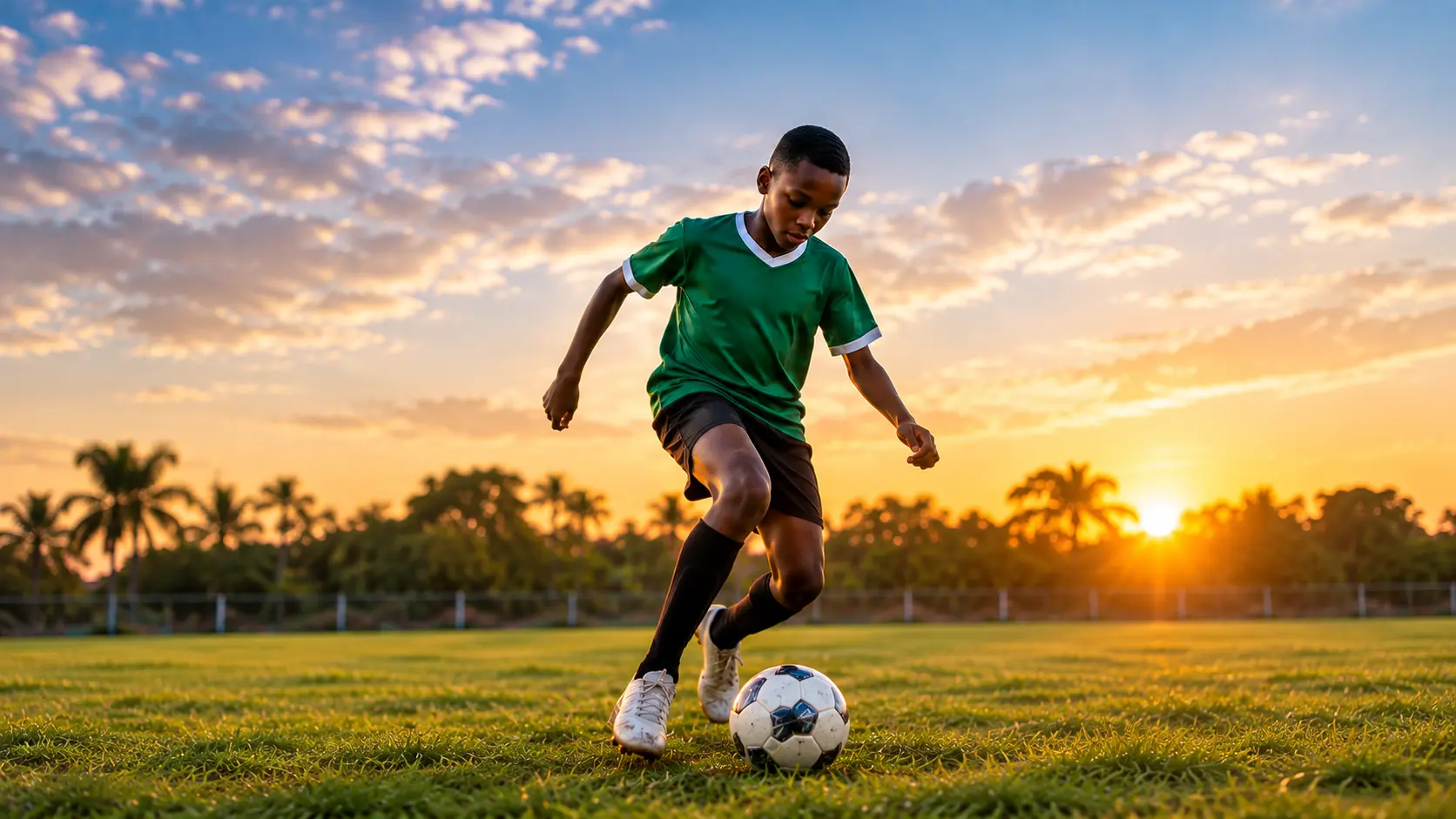
From Football Academy to Sport for Development: The Talanta Bora Journey
By Talanta Bora Academy | 16th July, 2025

From Football Academy to Sport for Development: The Talanta Bora Journey
Every organisation has a beginning.
For Talanta Bora, ours began with football.
It started with a simple belief that young people should have opportunities to play, train, develop their abilities and discover what they can achieve through sport.
But as the journey continued, we began to see something bigger.
Football was doing more than developing players.
It was bringing young people together.
It was creating friendships.
It was teaching discipline.
It was building confidence.
It was creating opportunities for leadership.
It was giving young people a place where they could belong.
And, importantly, it was creating relationships through which young people could be supported as people, not just as athletes.
That realisation shaped the journey that brought Talanta Bora from football development to Sport for Development, and ultimately towards our growing focus on Sport for Mental Health & Psychosocial Wellbeing.
Where it all began
Talanta Bora Ltd was registered in 2018.
In 2019, Talanta Bora Ltd gave birth to Emerging Stars Football Academy.
At the time, football was the natural starting point.
The game has an incredible ability to bring people together. A football pitch does not require everyone to have the same background, personality or experience. Once the game begins, players have to communicate, cooperate, make decisions and work towards something together.
For young people, those experiences can be powerful.
Training provides structure.
A team provides connection.
Competition creates challenges.
Coaching provides guidance.
And regular participation creates opportunities to grow.
Our early work focused strongly on football and athlete development. Young players were given opportunities to train, improve their technical abilities and understand the game.
But the more we worked with young people, the more we realised that sporting development cannot be separated completely from personal development.
Every player brings their whole life onto the pitch.
A young athlete is more than an athlete
It is easy to look at a young footballer and see only the player.
We see the striker.
The midfielder.
The defender.
The goalkeeper.
We see speed, technique, decision-making and potential.
But behind every player is a person.
They may be a student trying to balance school and sport.
They may be dealing with challenges at home.
They may be trying to build confidence.
They may be learning how to communicate.
They may be struggling to find where they belong.
They may have ambitions they are afraid to share.
They may simply need a positive environment where they can be themselves.
Sport does not exist separately from all these experiences.
That is why our understanding of development began to expand.
We started asking a bigger question:
What if sport could help develop not only better athletes, but stronger, healthier and more connected people?
The journey into Sport for Development
In 2023, Talanta Bora expanded its work into Sports for Development.
This was an important stage in our journey.
The idea was not to move away from sport.
It was to understand sport more broadly.
Sport could still develop athletes.
But it could also be used intentionally to create opportunities for education, life skills, leadership, inclusion, relationships and personal growth.
The pitch could become a classroom.
The team could become a community.
The coach could become a mentor.
The game could become a practical way of learning.
A difficult training session could become a lesson in discipline.
A disagreement between teammates could become an opportunity to learn communication.
A loss could become an opportunity to learn how to respond to disappointment.
A young player taking responsibility for their team could begin developing leadership.
The activity remained sport.
The purpose became bigger.
Why Sport for Development matters
Sport is naturally practical.
Young people do not only listen to instructions. They participate.
They make decisions.
They experience consequences.
They solve problems.
They work with others.
They try again after mistakes.
That makes sport a powerful environment for learning.
Consider a simple football exercise.
A coach may ask players to work together to keep possession.
On the surface, the exercise is about football.
But underneath it, players are also learning to communicate.
They have to pay attention to teammates.
They have to understand space.
They have to make decisions.
They have to trust one another.
They have to respond when something goes wrong.
The football activity becomes a practical lesson in teamwork and decision-making.
That is the power of Sport for Development.
The learning does not have to feel like a classroom lesson because the young person is experiencing it through participation.
From competition to character
Competition remains an important part of sport.
We want athletes to train seriously.
We want them to improve.
We want them to challenge themselves.
We want them to experience the excitement of competition.
But competition can also provide opportunities to develop character.
What happens when you lose?
How do you respond when a teammate makes a mistake?
How do you behave when the referee makes a decision you disagree with?
Can you remain disciplined when you are frustrated?
Can you encourage someone who is struggling?
Can you accept responsibility when you make a mistake?
Can you keep working when progress is slow?
These questions are bigger than football.
They are questions about how we respond to life.
That is why our approach to sporting development considers the person as well as the performance.
The growing focus on mental wellbeing
As our understanding of Sport for Development continued to grow, another important area became increasingly central to our work: mental wellbeing and psychosocial wellbeing.
Young people face many different pressures.
Sometimes they have the confidence to talk about those experiences.
Sometimes they do not.
Sometimes they know something is wrong but do not know how to express it.
And sometimes they simply need a safe environment where they can build positive relationships and feel that they belong.
Sport can contribute to that environment.
A training session can provide routine.
A team can provide connection.
Physical activity can create an opportunity to step away from everyday pressures.
A coach can create space for a conversation.
A teammate can provide encouragement.
None of this means that sport replaces professional mental health care.
It does not.
Instead, sport can be one part of a wider support system.
It can create environments where wellbeing is taken seriously and where young people are encouraged to talk, connect and seek appropriate support when they need it.
This is an important part of where Talanta Bora is heading today.
Sport for Mental Health & Psychosocial Wellbeing
Our current direction places stronger emphasis on Sport for Mental Health & Psychosocial Wellbeing.
This reflects an understanding that physical activity and sporting participation can be connected to many aspects of a person's development.
We want our programmes to create opportunities for young people to:
-
Build positive relationships
-
Develop confidence
-
Strengthen communication skills
-
Learn how to work with others
-
Develop healthy routines
-
Explore leadership
-
Build resilience
-
Feel a sense of belonging
-
Develop life skills
-
Recognise when they may need support
-
Become more connected to their communities
The objective is not to turn every sporting session into a formal mental health programme.
It is to create sporting environments where wellbeing is part of how we think about development.
Our programmes have grown with the mission
This wider understanding of sport is reflected in the areas we work across.
Our programmes include:
Football & Athlete Development
We continue to develop athletes through structured sporting experiences, technical development, teamwork, decision-making and our philosophy of Possession with Purpose.
We want players to understand the game, not simply follow instructions.
Sport for Mental Wellbeing
We explore how sport and physical activity can create positive environments for connection, confidence, participation and wellbeing.
Life Skills Through Sport
Young people can develop communication, teamwork, discipline, decision-making, problem-solving and other practical skills through sporting experiences.
Leadership & Youth Development
Sport creates opportunities for young people to take responsibility, support others and develop their ability to lead.
Education & Personal Development
We recognise that sporting development should exist alongside broader personal and educational growth.
Community Sport & Inclusion
Sport can bring different people together and create opportunities for participation, connection and belonging within communities.
Together, these programmes represent a broader understanding of what sport can do.
We don't just develop athletes
This is one of the most important ideas behind Talanta Bora.
We don't just develop athletes. We develop people.
An athlete may leave a training session having improved their passing technique.
That is valuable.
But they may also leave having learned to communicate better with a teammate.
They may have gained confidence.
They may have learned how to handle frustration.
They may have encouraged someone else.
They may have taken responsibility.
They may have discovered that they are capable of doing something they previously thought was difficult.
Those outcomes matter too.
Because one day, the young person may stop playing competitively.
Their sporting career may take a different direction.
They may choose another profession.
They may leave the academy.
But the person they become carries their experiences with them.
The life skills remain.
The relationships remain.
The confidence remains.
The lessons remain.
That is the long-term value we want sport to create.
From a football pitch to a wider purpose
Looking back, it is easy to see how the journey developed.
First came football.
Then came a deeper understanding of what young people experience through sport.
Then came Sport for Development.
And now there is an even stronger focus on mental wellbeing, psychosocial wellbeing, life skills, inclusion and personal development.
Each stage has built on the previous one.
We have not abandoned our football roots.
They remain an important part of who we are.
Instead, we have discovered that football can be a doorway to something much bigger.
The pitch can be a place where a young person develops confidence.
A training session can be a place where they discover discipline.
A team can be a place where they find belonging.
A coach can be someone who helps them recognise their potential.
And sport can become a pathway towards a healthier, more connected and more resilient life.
What comes next?
The journey is not finished.
Talanta Bora continues to grow and evolve.
Our goal is to keep creating sporting environments where young people can participate, develop and thrive.
That means continuing to invest in quality sporting experiences while also paying attention to the wider needs of the people we work with.
It means taking safeguarding seriously.
It means creating inclusive environments.
It means responsible coaching.
It means recognising when a young person may need additional support and knowing when to connect them with appropriate professional services.
It means listening.
It means learning.
And it means continuing to ask how sport can be used to create meaningful opportunities for young people and communities.
The game is still being played
Our story began with a football.
But the football was never the whole story.
It was the starting point.
It gave us a way to bring young people together.
It gave us a platform to teach.
It gave us an environment where relationships could develop.
It gave us a place where young people could challenge themselves and discover what they could become.
Over time, we realised that the game was bigger than the score.
Today, Talanta Bora stands on that belief.
We are a Sport for Development organisation using sport as a practical pathway towards mental wellbeing, psychosocial wellbeing, life skills, inclusion, personal development and stronger communities.
The journey from Emerging Stars Football Academy to Talanta Bora's broader Sport for Development approach has been a journey of learning.
And there is still more to learn.
There are more young people to support.
More communities to reach.
More relationships to build.
More opportunities to create.
More stories to tell.
The football is still rolling.
The journey continues.
And the game is still bigger than the score.
Latest News & Blogs
More News & Blogs
How Sport Can Support Mental Wellbeing and Psychosocial Wellbeing
Sport can create more than physical activity and competition. At Talanta Bora, we use sport as a pathway to support mental wellbeing, meaningful relationships, confidence, life skills and stronger co…
Read More
Why Football Development Should Build the Person, Not Just the Player
Football development is about more than technique, tactics and results. At Talanta Bora, we believe young players should develop their football intelligence, character, confidence and understanding o…
Read More
Building Safe and Inclusive Sporting Spaces for Young People
A positive sporting environment is about more than training and competition. Explore how safeguarding, inclusion, responsible coaching and supportive relationships can help create spaces where young …
Read More
Life Skills Through Sport: What Young People Learn Beyond the Pitch
Sport can teach much more than technique and competition. Discover how young people can develop communication, discipline, teamwork, leadership, confidence and decision-making through sporting experi…
Read More
The Game Is Bigger Than the Score: Why Talanta Bora Uses Sport for More Than Competition
At Talanta Bora, sport is more than competition and the score is only part of the story. We use sport as a pathway to build confidence, life skills, mental wellbeing, meaningful relationships and str…
Read More